Roadway engineering in Aurora, Illinois, encompasses the full spectrum of planning, analysis, design, and construction of pavements that must safely and efficiently accommodate both light passenger vehicles and heavy industrial traffic. The city’s position as a major logistical hub along the Interstate 88 corridor and its proximity to the Fox River create demanding conditions for transportation infrastructure. A comprehensive approach to roadway design here must account for freeze-thaw cycles, variable soil profiles, and stringent municipal standards that prioritize longevity and public safety. From initial subgrade evaluation through final pavement thickness determination, every decision must be grounded in local geotechnical conditions to prevent premature distress such as rutting, cracking, or frost heave.
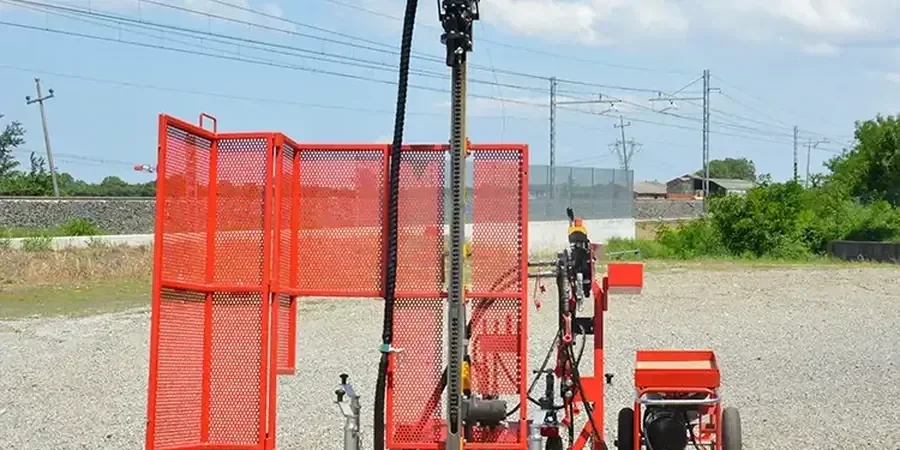
The geology of Aurora is shaped by its location within the Fox River Valley, where glacial outwash deposits, silty clays, and occasional organic lenses create a heterogeneous subsurface profile. This variability makes a thorough CBR study for road design essential before any pavement structure is proposed. The California Bearing Ratio test quantifies the strength of the native subgrade, revealing whether soils can support anticipated traffic loads or require stabilization with lime, cement, or mechanical compaction. Without this data, even well-designed pavements risk differential settlement and structural failure, particularly in areas where the water table fluctuates seasonally near the Fox River. Local experience shows that neglecting subgrade characterization is the most common cause of costly roadway reconstruction projects.
Design professionals working in Aurora must adhere to the Illinois Department of Transportation (IDOT) Standard Specifications for Road and Bridge Construction, which govern everything from aggregate base course gradation to asphalt binder performance grades. These specifications are adapted for the region’s climate, requiring materials that resist thermal cracking during winter lows and rutting during summer highs. The City of Aurora supplements state standards with its own municipal requirements for subdivision streets and arterial roadways, often mandating specific pavement cross-sections and drainage provisions. Compliance with the M-E Pavement Design Guide, adopted by IDOT, ensures that empirical and mechanistic principles are applied to predict pavement performance under local environmental and loading conditions.
The types of projects requiring this expertise range from new residential subdivision streets and commercial parking lots to the rehabilitation of major arterials like Ogden Avenue or Eola Road. For heavy-duty industrial access roads serving the city’s warehousing and distribution centers, flexible pavement design offers cost-effective construction and ease of phased rehabilitation, utilizing multiple lifts of hot-mix asphalt over a granular base. Conversely, rigid pavement design employing Portland cement concrete is often specified for high-traffic intersections and bus lanes where resistance to standing water and heavy static loads is critical. Each project demands a tailored solution that balances initial capital outlay with lifecycle maintenance costs, always rooted in a precise understanding of the underlying soil and anticipated traffic spectrum.
Frequently asked questions
What is the most critical factor in designing a long-lasting roadway in Aurora, Illinois?
The most critical factor is a thorough geotechnical investigation of the subgrade. Aurora’s glacial soils and proximity to the Fox River create highly variable conditions, including weak silty clays and high groundwater. A CBR study determines soil strength and identifies the need for stabilization, ensuring the pavement structure can support traffic loads without differential settlement or frost-related damage.
Which Illinois standards govern roadway construction in Aurora?
Roadway projects must comply with the Illinois Department of Transportation (IDOT) Standard Specifications for Road and Bridge Construction, which dictate material properties, compaction, and design methodologies. The City of Aurora often imposes additional local requirements for pavement cross-sections and drainage, and designs typically follow the AASHTO M-E Pavement Design Guide as adopted by IDOT.
How do flexible and rigid pavements differ in performance for Aurora’s climate?
Flexible pavements, made of asphalt, are better at withstanding freeze-thaw cycles without fracturing and allow for easier phased repairs, making them common for residential and industrial roads. Rigid concrete pavements offer superior resistance to heavy static loads and standing water, ideal for high-traffic intersections, but require very stable, uniform subgrade support to prevent cracking.
What types of roadway projects typically require a formal pavement design report?
Any public roadway, commercial parking lot, or industrial access road in Aurora requires a formal design report. This includes new subdivisions, arterial rehabilitations, and warehouse distribution center roads. The report must justify the structural section using IDOT standards and subgrade data, ensuring the design meets the city’s requirements for traffic loading and environmental durability.