Foundation systems serve as the critical interface between a structure and the ground beneath it, transferring all building loads safely into the earth. In Aurora, Illinois, the importance of proper foundation engineering cannot be overstated, given the region's unique geotechnical challenges. A well-designed foundation prevents differential settlement, resists frost heave, and provides long-term structural integrity. Whether for a single-family residence, a mid-rise commercial building, or a municipal infrastructure project, the foundation category encompasses site investigation, soil analysis, structural design, and construction oversight to ensure that every element below grade performs reliably across decades of service in northeastern Illinois.
Aurora sits predominantly on glacial till and outwash deposits left by the Wisconsin glaciation, with subsurface conditions that vary dramatically across the Fox River Valley. Many areas feature layers of compressible silty clay and peat, while others contain loose sands and gravels that can be prone to settlement under load. The water table is often high, particularly near the Fox River and its tributaries, creating challenges for excavation and requiring careful dewatering or watertight foundation solutions. Expansive clay lenses, though less severe than in other parts of the Midwest, still demand attention to moisture control and soil stabilization. These local geological realities make site-specific geotechnical investigation an absolute necessity before any foundation type is selected.
Foundation design and construction in Aurora must comply with the International Building Code (IBC) as adopted by the State of Illinois, along with local amendments enforced by the City of Aurora's Building and Permits Division. Key provisions include Chapter 18 of the IBC, which governs soils and foundations, as well as the referenced standards of ASCE 7 for minimum design loads. Residential foundations typically follow the International Residential Code (IRC), with specific requirements for footing depth below the frost line — set at 42 inches in Kane County — and for reinforcement of concrete walls. For deeper foundations and specialized systems, the American Concrete Institute (ACI 318) and the Deep Foundations Institute (DFI) guidelines provide additional design and testing standards that local geotechnical engineers routinely apply.
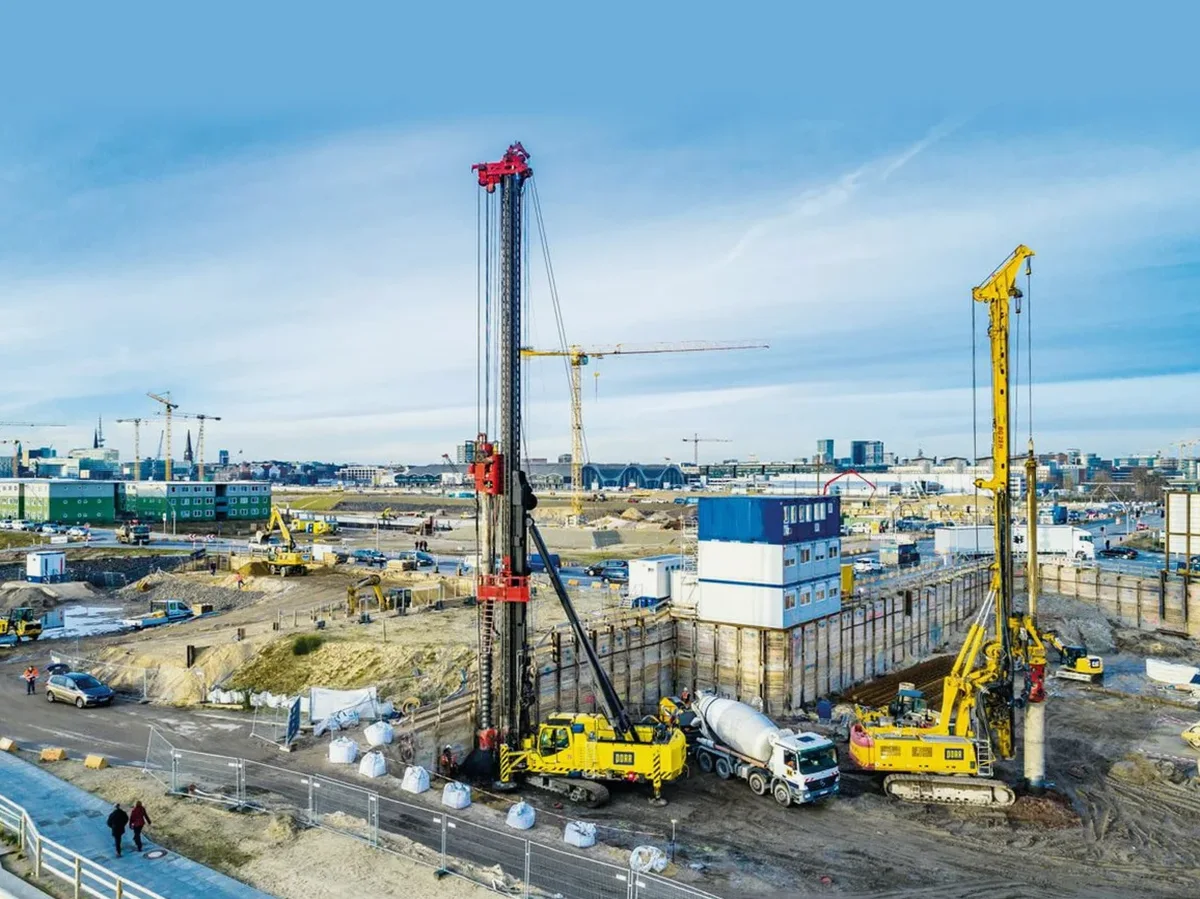
The types of projects requiring engineered foundations in Aurora span the full spectrum of construction. Custom homes on sloping lots near the river bluffs often need stepped footings or retaining wall integration. Multifamily developments and commercial structures in the downtown core frequently require deep foundations when weak near-surface soils cannot support shallow footings. Industrial facilities and warehouses in the city's eastern and western corridors rely on ground improvement or specialized pile foundation design to handle heavy column loads and sensitive equipment. Infrastructure projects — from water treatment plants to bridge abutments — demand robust foundation solutions that account for scour, lateral earth pressures, and seismic considerations in accordance with current code requirements.
Available services
Frequently asked questions
What are the most common types of foundations used in Aurora, Illinois?
In Aurora, shallow foundations like spread footings and slab-on-grade systems dominate residential construction where competent glacial till is encountered near the surface. For commercial and industrial projects, or where weak compressible soils exist, deep foundations such as driven piles or drilled shafts are frequently specified. The choice depends on soil bearing capacity, proximity to the Fox River, and structural loading requirements determined through geotechnical investigation.
How deep do foundations need to be in Aurora to avoid frost heave?
Foundations in Aurora must extend below the frost line, which is established at 42 inches below grade for Kane County per the International Residential Code and local amendments. This depth prevents frost heave from lifting and cracking foundation elements during winter freeze-thaw cycles. Deeper frost protection may be required for unheated structures or where insulation is not provided in accordance with code provisions.
What role does a geotechnical investigation play in foundation design?
A geotechnical investigation provides the subsurface data essential for foundation design, including soil stratigraphy, bearing capacity, compressibility, and groundwater conditions. In Aurora, where glacial deposits vary widely, this investigation determines whether shallow footings are feasible or if deep foundations are required. It also informs recommendations for excavation support, drainage, and soil treatment, reducing the risk of costly failures or construction delays.
Are there special foundation considerations for properties near the Fox River?
Yes, properties near the Fox River often encounter high groundwater tables, floodplain soils with low bearing capacity, and potential for scour. Foundations in these areas may require deep pile systems that extend to competent strata below weak alluvial deposits, along with waterproofing and drainage measures. Flood-resistant design provisions of the IBC and local floodplain ordinances also influence foundation elevation and construction methods near waterways.