In-situ testing forms the backbone of geotechnical engineering in Aurora, Illinois, providing engineers and contractors with real-world data about soil and material behavior without removing samples from their natural environment. This category encompasses field investigations that evaluate soil density, strength, permeability, and deformation characteristics directly on the construction site. For a city like Aurora, with its mix of historic downtown structures and rapidly expanding suburban developments along the Fox River Valley, accurate in-situ assessments are critical for foundation design, earthwork quality control, and infrastructure longevity. The data gathered through these methods informs everything from shallow footing dimensions to deep foundation requirements, directly impacting project safety and cost efficiency.
Aurora's geological setting presents unique challenges that make in-situ testing indispensable. The city sits atop glacial deposits from the Wisconsinan glaciation, characterized by complex layering of silty clays, sandy loams, and occasional gravel lenses. The Fox River has carved through these deposits, leaving behind alluvial terraces with highly variable bearing capacities. Near-surface soils in many areas contain compressible organic silts and soft clays that are prone to settlement. Additionally, the region's seasonal freeze-thaw cycles and fluctuating groundwater tables—often encountered within 6 to 10 feet of the surface—demand thorough field verification of soil behavior. In-situ methods like the field density test (sand cone method) allow engineers to directly measure compaction levels in these challenging glacial soils, ensuring that engineered fills meet specifications despite the natural variability.
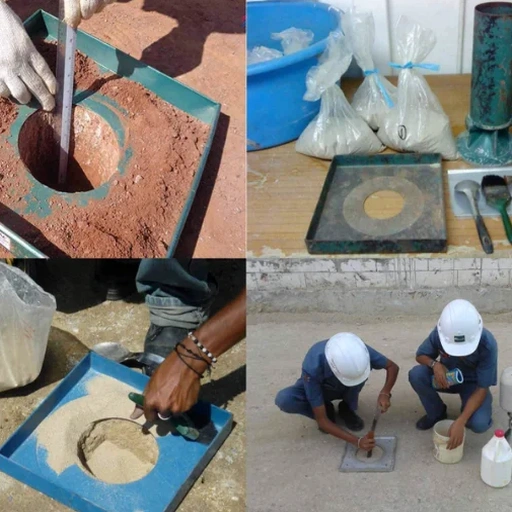
Regulatory compliance in Aurora is governed by the Illinois Building Code, which adopts the International Building Code (IBC) with state-specific amendments, alongside local ordinances from the City of Aurora's Building and Permits Division. The code mandates geotechnical investigations for all commercial and multi-family residential projects, with in-situ testing requirements referenced through ASTM International standards. For example, ASTM D1556 outlines the standard test method for density of soil in place by the sand-cone method, while ASTM D6938 covers nuclear gauge testing. The Illinois Department of Transportation (IDOT) also enforces its own Standard Specifications for Road and Bridge Construction, which heavily influence testing protocols for public infrastructure projects throughout the Aurora area. These standards ensure that field testing produces defensible, reproducible results that satisfy both building officials and design professionals.
The types of projects requiring in-situ testing in Aurora span the full construction spectrum. Residential subdivisions in growing neighborhoods like Eola and Far East Aurora rely on field density testing to verify compaction of building pads and utility trench backfill. Commercial developments along the Route 59 corridor and downtown revitalization projects demand comprehensive in-situ assessments to address the unpredictable urban fill and relic river deposits. Transportation infrastructure, including I-88 interchange improvements and local road widenings, requires rigorous compaction control and subgrade evaluation. Even smaller-scale projects such as retaining walls, stormwater detention basins, and solar farm installations benefit from targeted in-situ testing to mitigate risks associated with Aurora's variable subsurface conditions. Each application underscores the value of obtaining direct field measurements rather than relying solely on laboratory testing of disturbed samples.
Available services
Frequently asked questions
What exactly does in-situ testing mean in geotechnical engineering?
In-situ testing refers to field investigations performed directly on soil or rock at its natural location, without removing samples for laboratory analysis. These methods measure properties like density, strength, permeability, and deformation under actual field conditions, preserving factors such as moisture content, stress state, and soil structure that are difficult to replicate in a lab setting.
Why is in-situ testing preferred over laboratory testing for some Aurora projects?
Aurora's glacial soils often contain sensitive silts and layered deposits that are easily disturbed during sampling and transport. In-situ testing avoids this disturbance, providing more reliable data on compaction, bearing capacity, and settlement potential. It also allows for immediate quality control decisions during earthwork operations, accelerating construction schedules while ensuring compliance with Illinois Building Code requirements.
Which in-situ testing methods are most commonly used in the Aurora area?
Common methods include the sand cone test for field density verification, Standard Penetration Tests (SPT) for soil strength profiling, Cone Penetration Tests (CPT) for continuous stratigraphy, and nuclear density gauge testing for rapid compaction control. The choice depends on project type, soil conditions, and whether the work must meet IDOT specifications for public infrastructure or IBC requirements for commercial buildings.
How do local regulations affect in-situ testing requirements in Aurora, Illinois?
The City of Aurora enforces the Illinois Building Code, which requires geotechnical investigations with in-situ testing for most commercial and multi-family projects. Testing must follow ASTM standards such as D1556 for sand cone density or D6938 for nuclear methods. Public works projects must additionally comply with IDOT Standard Specifications, which prescribe specific field testing frequencies and acceptance criteria for compacted fills and subgrades.